

 Become a Fan

Departments |
- Dining & Food
- Visiting & Cultural Attractions
- Shopping
- Services
- Kids
- Seniors
- Weddings & Celebrations
- Education
- Healthcare
- Recreation, Fitness & Outdoors
- Home & Garden
- Real Estate
 |
 |
 |
 |
 |
 |
 |
 |
 |
 |
 |
 |
 |
 |
 |
 |
 |
 |
 |
 |
 |
You'll Love These Directories Too! |
 |
 |
 |
 |
 |
 |
 |
 |
 |
 |
 |
 |
 |
 |
 |
 |
 |
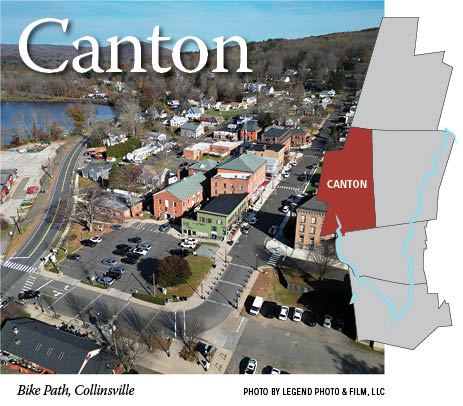
Comprising industrial Collinsville, colonial-era Canton Center, rural North Canton, and commercial Canton Village, Canton may be the smallest of the Farmington Valley towns, but it also continues to be one of the fastest growing. Indeed, the continued commercial expansion along Route 44 and the abundance of affordable, scenic land has attracted many new residents and businesses. At the heart of Canton is the village of Collinsville, formerly a thriving industrial center. Surrounded by steep hills and situated on the Farmington River, it is Canton’s distinctive downtown, the seat of the town government, and an artistic center continually adding new homegrown attractions. It also offers some of the Valley’s most affordable housing. Collinsville’s industrial history, championed by the once world-famous Collins Axe Company, is still evident in the many circa-1826 mill-style buildings that dominate this section of the river, many of which have been converted to art studios, artisan workshops, and a place called Antiques on the Farmington — a fascinating multi-floor, multi-dealer antiques emporium that opened in 2006 in the axe factory itself, creating a unique attraction that lures residents and out-of-towners alike for some interesting browsing and buying. The Town of Canton's recent partnership with Canton Hydro, LLC, has restored the Upper Collinsville Hydroelectric power plant to the grid for the first time in more than 55 years, strengthening New England’s electrical power Just up Main Street is LaSalle Market, an informal breakfast, lunch, and dinner spot well known for a variety of specialty sandwiches and its country atmosphere. And the old wooden train station near the Collins factory, now beautifully renovated, is a nifty little place called Lisa’s Crown & Hammer, which offers food and drink that everybody crows about. Just off Main on Market Street is the Canton Town Hall (c. 1806) — its small auditorium home to the Farmington Valley Stage Company, an all-volunteer group. And down a ways is Carol & Company, which features handcrafted items and unique jewelry, as well as Creative Kitchen & Bath, which, offering high-end kitchen and bath fixtures and designs, has expanded into the old Eaton Hardware space. One block up, occupying another historic brick building, is the original Collinsville Bank. Until not so very long ago, it continued the practice of filling out and stamping each customer’s savings account passbook by hand. And from its old front door, you can enjoy a lovely view of the quaint village green. Also in the village is Collinsville Canoe & Kayak, where you can rent a canoe and take it out on a peaceful stretch of river right behind the store. Next door, some local entrepreneurs opened Bridge Street Live a few years back — a nice 300-seat performance venue and restaurant, breathing new life into a group of long-empty, interconnected wooden buildings, which were home to the Miner Lumber Company until it relocated a mile north on Route 179. Nearby, beautiful Riverside Nursery Garden Center and Florist is a must see, and if it’s close enough to Christmas, they’ll take your Christmas tree order over the phone and deliver it. Traveling farther north toward Canton Center on 179, the landscape turns distinctively rural and ideal for a scenic Sunday drive. Several family-run farms, such as Case’s, line the roadside and sell in-season produce, Christmas trees, and homemade canned goods, including pickles and relishes, while the village itself clusters around the First Congregational Church. Just ahead, at a curve in Cherry Brook Road, sits the North Canton School House, which was built around 1872. And equally picturesque is the nearby North Canton Community United Methodist Church, where every year local animals are blessed. Across the road, Cherry Brook Farm, another landmark, is postcard perfect. Canton’s original center, Canton Village, is located around the town green at the intersection of Dowd Road and Route 44. Here, the modern commercial strip that cuts through Avon and past The Shops at Farmington Valley narrows and slows down a bit, hinting at the Albany Turnpike’s historic origins. And here, all kinds of unique shops, vintage furniture boutiques, and restaurants — none too fancy — occupy a variety of wooden structures that used to be homes, taverns, or meeting halls. Anyone interested in flea-market chic will love them, especially little gems like The Junk Shop. And if gardening is your thing, a stop at Tower Farms Garden Center won’t disappoint. A bit beyond the Green, the Canton Village shopping plaza offers shoppers and diners the Valley’s most eclectic array of independents. Stalwarts like Larsen Ace Hardware have been joined by Valley Fireplace & Stove. A few chains, such as Walgreens, make the plaza both fun and functional. And tucked away, off the north side of Route 44, is Roaring Brook Nature Center, which has nice walking trails, guided nature walks, folk music performances, and programs for kids. Is the growth and development Canton has experienced of late good for the town? Some have wondered, worrying that it might affect Canton’s staunch small-town character. But as time passes, most have come to appreciate the benefits of the progress logged and are preparing for new opportunities in ways that will serve to enhance both Canton’s good fortunes and its timeless appeal. |
 | |  |  | | |  |  |

|
|
||||||
© 2002-2024 Distinctive Directories, LLC
Contact Us | The Valley Book | The West Hartford Book | The Glastonbury Book | The Shoreline Book